RESOURCES
The Colors of Home collection
The Colors of Home collection is a series of three children’s coloring books that explore everyday family life through simple, bold illustrations and small story prompts.
Love Lives Here — available on Amazon
Joy Lives Here – available on Amazon
Growing Together — available on Amazon
Coloring Posters (Free Download)
Simple, bold posters to color together.
Each one features families from around the world, in joyful everyday moments.
Download free printable posters inspired by our coloring books – perfect for home, the classroom, or a playdate.
More free printables coming soon.
Love Lives Here – Poster
Diverse families
Everyday moments
Great for kids aged 4–10
Download PDF
Joy Lives Here – Celebrations Poster
Families celebrating around the world
Festivals, traditions, joyful moments
A mix of cultures and family types
Download PDF
Growth Lives Here – Growth Poster
Families learning and growing together
Small steps, new skills, trying again
A mix of journeys and emotions
Download PDF
How to talk to children about
different kinds of families
Children notice differences long before adults are ready to talk about them. Different family structures, cultures, and ways of living are part of their everyday world. The real question is not if these conversations should happen, but how to approach them in a way that is honest, age-appropriate, and supportive.
A good starting point is simplicity. Young children do not need complex explanations or abstract definitions. They understand the world through relationships and routines. Saying “families can look different, but they all take care of each other” is often enough to open the conversation. What matters most for children is not the specific structure of a family, but the presence of stable, supportive relationships.
Another key principle is to follow the child’s lead. Children tend to ask direct questions, and those questions deserve direct answers. Overexplaining can create confusion where none existed. If a child asks why a classmate has two mums or two dads, a simple response such as “some families have two mums, some have two dads, some have one parent, and some have a mum and a dad” keeps the tone neutral and factual.
Sometimes, these moments come with surprising ease. Some years ago, a friend of my daughter, when he found out she also had two dads, reacted with genuine excitement: “Do they both take you to the park?” For him, the difference was not strange or complicated, it was simply an added possibility. That kind of reaction is a reminder that children are often far more open than adults expect, as long as we don’t teach them otherwise.
Language matters more than people think. Avoid framing differences as something unusual or “special” in a way that isolates. Instead, present them as part of the natural variety of human life. Children build their understanding based on what they see as normalised around them.
It is also important to widen the conversation beyond family structure. Children notice differences in skin colour, languages, abilities, and cultural practices just as quickly. When questions about race, disability, or traditions come up, the same principle applies: answer simply, respectfully, and without discomfort. Silence or vague answers can unintentionally signal that these topics are negative or off-limits.
Representation also plays a powerful role. Books, drawings, and everyday examples can help children see different types of families, cultures, and abilities without needing a formal conversation. When diversity is present in what they read and see, it becomes part of their baseline understanding of the world.
Finally, consistency matters more than perfection. Children build their understanding over time, through repeated exposure and small conversations. A single “perfect” explanation is far less important than creating an environment where questions are welcome and differences are treated with respect.
In the end, talking about different kinds of families is not about teaching children something new. It is about helping them make sense of what they already see, in a way that keeps their curiosity intact and their sense of belonging secure.
If you would like to explore this topic further, we have included a small selection of trusted resources:
LEARN MORE
Coloring materials for every skin tone
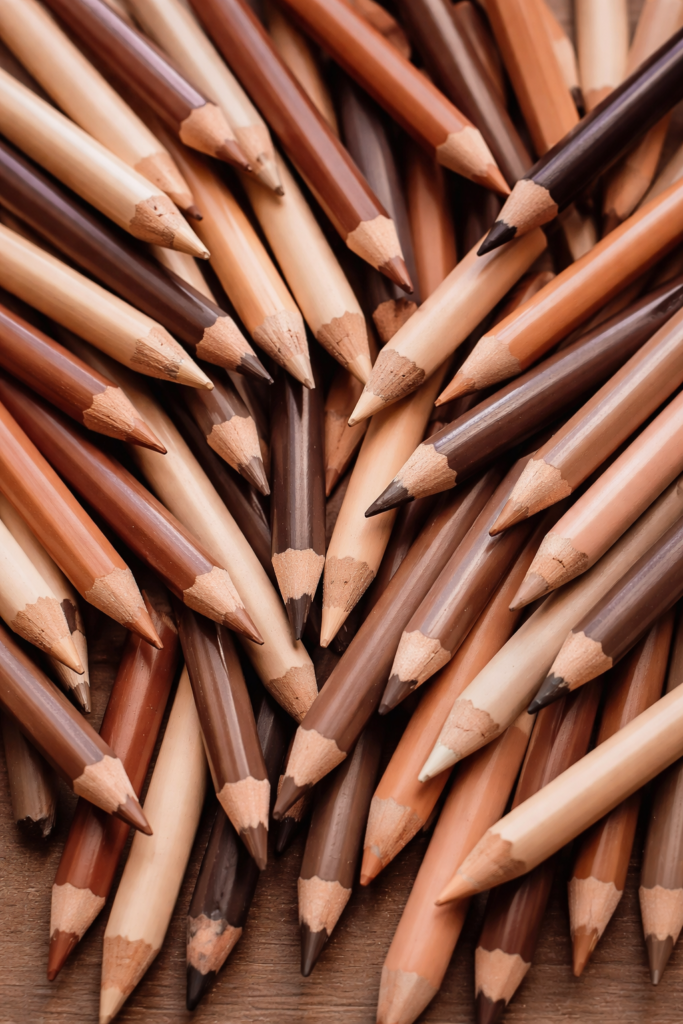
When children color families, having a wide range of skin tones makes the experience more meaningful. Here are some pencil sets we recommend:
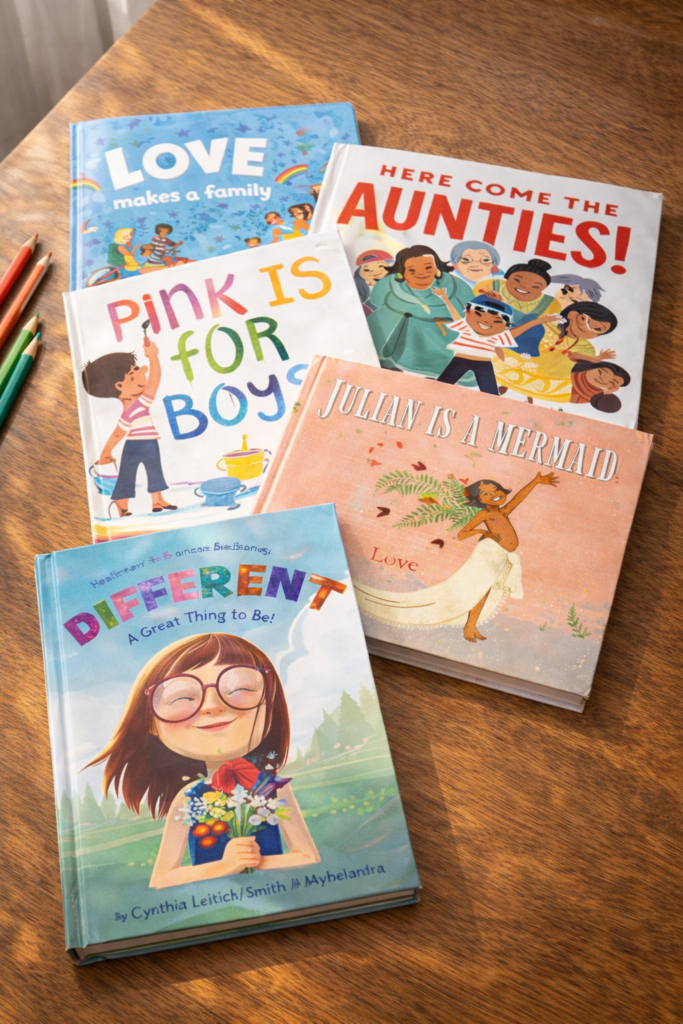
Books that celebrate Families
Pink is for boys — Robb Pearlman
Love Makes a Family — Sophie Beer
Here come the Aunties! — Eliza Hull & Sally Rippin
Julian Is a mermaid — Jessica Love
Different – A great thing to be! — Heather Avis
The world is full of different families and stories.
All it takes is curiosity and kindness to discover them.